Skip to content

Amy Fell, Marketing & Communications Director and Mental Health First Aider, reflects on her recent Suicide First Aid training and the Consortium for the Prevention of Suicide’s World Suicide Prevention Day Conference.
Content note: This article discusses suicide, suicidal thoughts and domestic abuse. Details of support services are provided at the end.
On 10 September, World Suicide Prevention Day, I attended the Consortium for the Prevention of Suicide’s annual conference at Lloyd’s of London.
The conference followed the Suicide First Aid training I completed through the Consortium in August. Although I was already a Mental Health First Aider, the course deepened my understanding of suicide intervention and helped me feel more confident about responding when someone may be experiencing suicidal thoughts.
One of the most important lessons was also one of the simplest: we must not be afraid to use the word suicide.
People can worry that asking someone directly, “Are you thinking about suicide?”, could make the situation worse or put the idea into their head. It does not. Asking clearly and compassionately can give someone permission to say what they are experiencing and open the door to support. Using vague language can make it easier for someone to avoid answering. A direct question shows that we are prepared to hear the answer, however difficult it may be.
The importance of interruption
Another powerful theme was the importance of interrupting suicidal thoughts.
When someone is in crisis, their thinking can become increasingly narrow. They may feel trapped, overwhelmed or convinced that there is no alternative to ending their pain. A conversation, a question or simply the presence of another person can interrupt that thought process and create time for the person to connect with support.
We don’t have to be therapists or have all the answers. We do need to notice when something may be wrong, ask the question, listen without judgement and help the person reach appropriate support.
More than 6,000 suicides were registered in England and Wales during 2024, while recent research suggests that around one in four adults in England has experienced suicidal thoughts at some point in their life.
The highest suicide rates are currently found among people in middle age, particularly men, but suicidal thoughts can affect people of every age and background. Increasing levels of suicidal thoughts and self harm among younger people also reinforce why early conversations and access to support matter.
Behind every statistic is an individual, along with the family, friends and colleagues affected by their death – the ripple effect is estimated at 135 people per death by suicide.
Suicide is preventable, but prevention depends on our willingness to recognise the risk and talk openly about it.
Lived experience
The conference included several powerful contributions from people with lived experience.
Clarke and Carrie Carlisle spoke openly about the impact suicidal thoughts and suicide attempts have had on their lives and relationship. Their honesty demonstrated not only the realities of suicidal crisis, but also the possibility of recovery and the importance of support for the people surrounding someone who is struggling.
We also heard from Joe Jones, who survived a suicide attempt and went on to create the Field of 4,300 Lights. The installation represents the thousands of men who die by suicide in England each year, turning an overwhelming statistic into something visible and deeply human. Joe was courageous in discussing his ongoing battle with suicidal thoughts.
Caroline Roodhouse also spoke from her own experience about compassionate communication and the responsibilities workplaces have in preventing suicide by providing support to those affected by suicide. She contributed to the First Steps Guide supporting BS 30480, the new British Standard on suicide and the workplace, an important step forward for consistent best practice.
Christine Clark highlighted the importance of Suicide Intervention training and the role the workplace has in equipping their people with the confidence to spot the signs.
The speakers were honest about an extremely difficult subject, but the overall message was one of hope: intervention is possible, recovery is possible and conversations can save lives.
Speaking their names
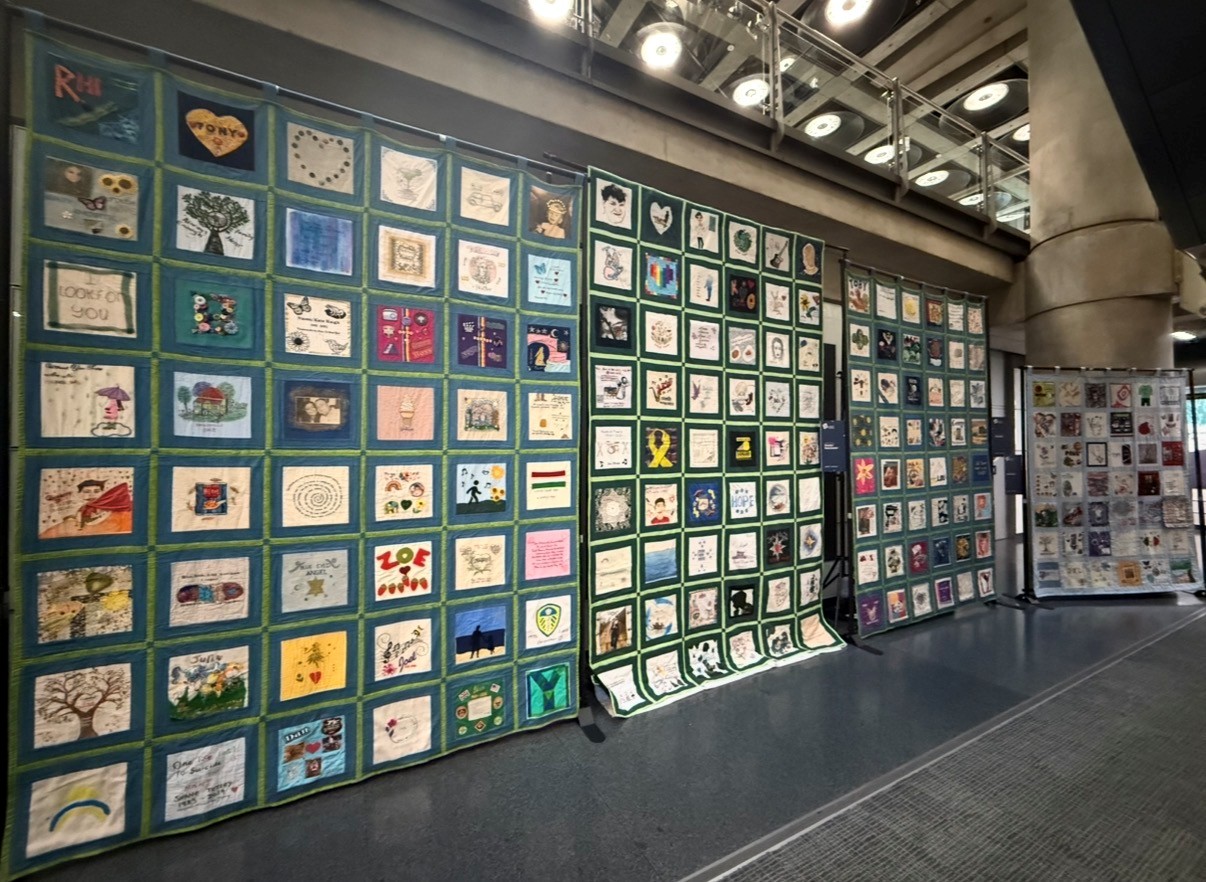
One of the most affecting parts of the conference was seeing the Speak Their Name suicide memorial quilts displayed together.
The quilts have been created in different counties across the country by people bereaved by suicide. Each is made up of individual squares commemorating someone who has died, using words, photographs, colours and objects that reflect who that person was and what they meant to those who loved them.
Seeing the quilts made it impossible to think about suicide only in terms of statistics. Every square represented an individual life, as well as a family, group of friends and community living with that person’s loss.
The project also gives bereaved families an opportunity to connect with others, share their experiences and ensure their loved ones are remembered for how they lived, not defined by how they died. It is a powerful reminder that changing the way we talk about suicide must include speaking the names and telling the stories of those we have lost.
The connection with domestic abuse
The conference also reinforced the relationship between domestic abuse and suicide.
Domestic abuse is not limited to physical violence. Coercive control, isolation, intimidation, psychological abuse and financial control can leave someone feeling trapped and without hope. In some cases, the impact can contribute to suicidal thoughts or suicide.
This is particularly relevant to FRG as we progress through our three-year White Ribbon accreditation programme. Our work with White Ribbon is focused on preventing violence against women and girls, challenging harmful attitudes and creating a culture in which people feel able to speak up and seek support.
Suicide prevention and domestic abuse prevention cannot be treated as entirely separate issues. Both require us to listen, recognise warning signs, challenge silence and make sure people know where they can turn, for both men and women.
What can each of us do?
We can’t always know what another person is carrying. However, we can notice changes, check in and be prepared to ask again if the first answer does not feel genuine.
- If you are worried about someone:
- Find a safe and private opportunity to speak with them.
- Explain what you have noticed.
- Ask how they are feeling and listen without judgement.
- If you are concerned about suicide, ask directly: “Are you thinking about suicide?”
- Take the answer seriously.
- Help them contact appropriate professional or crisis support.
- If there is an immediate risk to life, call 999 or go to A&E.
Completing Suicide First Aid training did not give me every answer. What it gave me was greater confidence to start a conversation, use direct language and remain present when someone needs support.
We should never be frightened of saying the word suicide. Silence does not keep people safe. Compassionate, honest conversations can.
Support is available
If you are experiencing suicidal thoughts, are struggling to cope or are worried about somebody else, support is available:
Immediate danger: Call 999 or go to A&E if you or someone else cannot stay safe.
NHS urgent mental health support: Call 111 and select the mental health option.
Samaritans: Call 116 123 free, 24 hours a day, 365 days a year.
Shout: Text SHOUT to 85258 for free, confidential, 24-hour text support.
Mind Support Line: Call 0300 102 1234, Monday to Friday, 9am–6pm. This is not a crisis service.
Childline: Anyone under 19 can call 0800 1111 free. The number will not appear on a phone bill.
ANDYS MAN CLUB: Free peer-to-peer support groups for men take place at 7pm every Monday, excluding bank holidays. Find a local or online group at andysmanclub.co.uk. This is not an immediate crisis service.
National Domestic Abuse Helpline: Call 0808 2000 247 free and confidentially, 24 hours a day, or visit nationaldahelpline.org.uk.
FRG colleagues can also speak to one of our Mental Health First Aiders or contact the HR team for information about the support available.

Article By:
Head of Marketing & Communication